
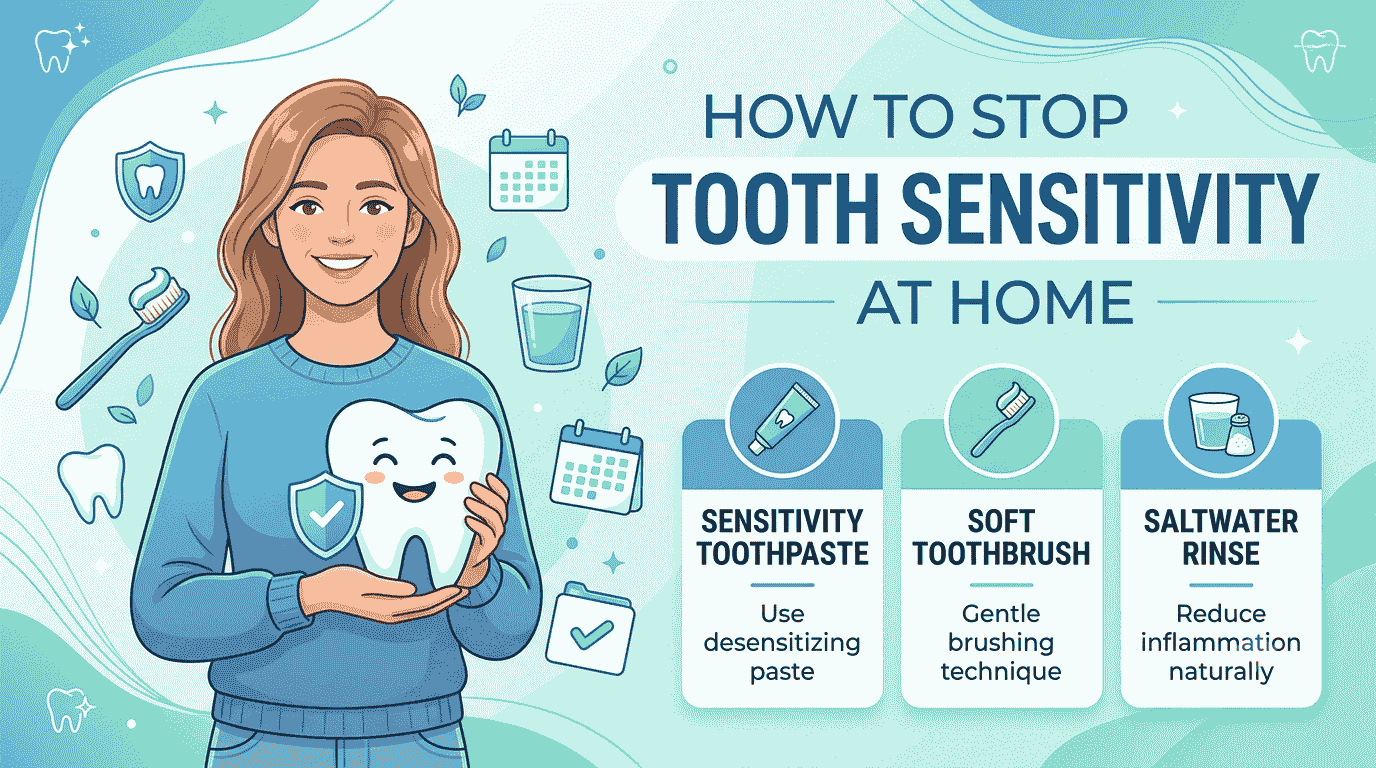
How to stop tooth sensitivity at home — what actually calms it down, what makes it worse, and when the pain means it’s time to see a dentist.
How to Stop Tooth Sensitivity at Home
Cold water hits one specific tooth and it’s like a small electrical fault goes off in your skull. You already know which one before it happens. You’ve started drinking coffee slightly to one side, chewing away from it, wincing preemptively at the freezer aisle.
That specific, sharp, short jolt — not a dull ache, a jolt — is tooth sensitivity, and it’s one of the more common dental complaints out there. It’s also one people put off dealing with longer than almost anything else, mostly because it’s manageable enough to ignore. Until it isn’t.
Here’s what’s actually happening, what helps at home, and — the part most home-remedy lists skip — where “manage it yourself” stops being the right call.
What’s Actually Causing It
Sensitivity happens when the protective layer over your tooth — enamel on the crown, or the gum line covering the root below it — has worn down or receded enough to expose the dentin underneath. Dentin is full of microscopic tubules that lead straight to the nerve, so cold, heat, sweetness, or even a cold breeze can trigger a signal that gets read as pain.
The usual causes: enamel erosion from acidic foods and drinks, gum recession (from aggressive brushing more often than people expect, or from gum disease), teeth grinding at night wearing down enamel gradually, or a cracked tooth letting stimuli reach the nerve more directly. Whitening treatments can also cause temporary sensitivity as a side effect, usually fading within a few days.
Knowing which one applies to you actually matters, because the fix is different depending on the cause — which is exactly why generic advice lists tend to underperform here.
The Toothpaste Switch That Actually Works
Desensitizing toothpaste is the single most effective at-home fix, and it works through a specific mechanism, not just marketing. Ingredients like potassium nitrate work by calming the nerve fibers inside the tooth over time, while stannous fluoride or arginine-based formulas work by physically blocking the exposed dentin tubules.
The catch: it takes consistent use, usually two to four weeks of regular brushing, before the effect really kicks in. People often try it for three days, feel nothing, and give up right before it would’ve started working. Brush with it exactly as you would regular toothpaste — no special ritual needed, just patience.
A small trick that helps: after brushing at night, spit but don’t rinse. Rinsing right away washes away the active ingredients before they’ve had time to sit against the exposed area.
Stop Brushing Like You’re Mad at Your Teeth
This one’s uncomfortable to hear because it usually means the habit that feels the most “thorough” is actually the problem. Aggressive brushing, especially with a hard-bristled brush and a side-to-side scrubbing motion, wears down enamel and pushes gums back over time — which is exactly what exposes the sensitive layer in the first place.
Switch to a soft-bristled brush, hold it more like a pencil than a fist, and use gentle circular motions instead of scrubbing side to side. It feels like you’re barely doing anything at first. That’s usually the correct amount of pressure.
Watch What’s Actually in Your Diet
Acidic foods and drinks — citrus, soda, wine, sparkling water, even some fruit-heavy smoothies — soften enamel temporarily on contact. Brushing immediately after having something acidic can actually make it worse, since you’re scrubbing enamel while it’s still in its softened state.
The better order: rinse with plain water after something acidic, wait about 30 minutes, then brush. If sensitivity is already an issue, a straw for acidic drinks reduces direct contact with the front teeth, and swishing water afterward helps neutralize things faster than just letting saliva do the work alone.
Check for Grinding, Especially If Mornings Are Worse
If sensitivity is noticeably worse first thing in the morning, or if you wake up with jaw soreness or a slight headache near your temples, nighttime teeth grinding is a common and often overlooked cause. Grinding wears down enamel steadily over months or years without much warning, and most people find out they do it from a partner mentioning the sound, not from noticing it themselves.
A dentist can fit a night guard, which is genuinely one of the more effective long-term fixes if grinding is the actual root cause — home remedies alone won’t stop enamel wear that’s happening every night while you’re asleep.
A Few Things That Sound Helpful But Aren’t
- Baking soda as a DIY whitening scrub — it’s abrasive enough to make sensitivity worse over time, especially with any regularity
- Charcoal toothpaste — trendy, but often more abrasive than standard formulas, and not built with sensitivity in mind
- Ignoring it because it’s “only sometimes” — intermittent sensitivity is often the early, easier-to-treat stage. Waiting until it’s constant usually means the cause has progressed further
When Home Care Isn’t Enough
Sensitivity that comes and goes, tied to specific triggers like cold drinks, usually responds well to a few weeks of desensitizing toothpaste and a gentler brushing routine. That’s the manageable version.
See a dentist sooner rather than later if:
- Pain lingers well after the trigger is gone, rather than fading within seconds
- Sensitivity is isolated to one specific tooth rather than a general area
- There’s visible gum recession, a dark spot, or a change in the tooth’s appearance
- Over-the-counter desensitizing toothpaste hasn’t helped after a full month of consistent use
- Pain wakes you up at night, which often points to something beyond surface sensitivity
Lingering pain in particular is the detail worth paying attention to. A quick jolt that fades in a couple of seconds is classic sensitivity. Pain that sticks around for a minute or more afterward is a different signal — sometimes it’s about the nerve itself, not just the exposed dentin, and that’s not something toothpaste fixes.
FAQ
How long does it take for desensitizing toothpaste to work?
Usually two to four weeks of consistent, regular use before the effect becomes noticeable. Short-term use often feels like it isn’t working yet.
Can brushing too hard cause tooth sensitivity?
Yes — aggressive brushing wears down enamel and can push gums back over time, both of which expose the sensitive layer underneath.
Is tooth sensitivity a sign of a bigger dental problem?
It can be. Isolated sensitivity in one tooth, lingering pain, or pain that wakes you at night are signs worth having a dentist check rather than managing at home indefinitely.
Does whitening toothpaste make sensitivity worse?
It can, since some whitening formulas are more abrasive. If sensitivity is already an issue, a dedicated desensitizing toothpaste is usually the better choice.
Should I rinse my mouth after brushing with desensitizing toothpaste?
Spitting without rinsing right after brushing lets the active ingredients stay in contact with the teeth longer, which can improve results.